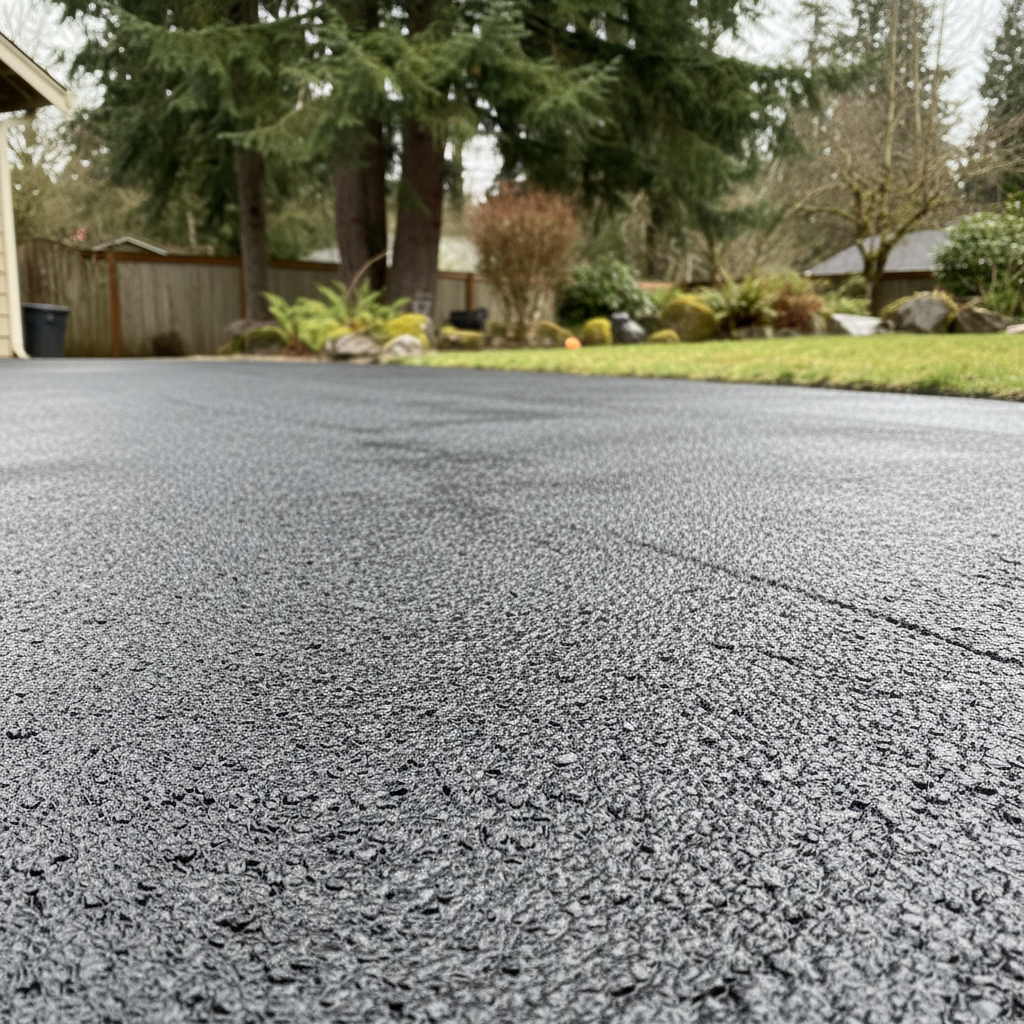
Your driveway takes a beating out here in Canby, OR, and the Willamette Valley climate is hard on pavement. Between the soggy winter soaking into the sub-base and the baking dry summer heat down by the Clackamas River, asphalt loses its binder fast. If your surface is looking gray, oxidized, and starting to shed small stones, you are looking at a pavement that needs protection before water gets into the cracks and destroys the whole pad.
Slurry coating is one of the best ways to hit the reset button. But before you grab a squeegee and five gallons of product from the hardware store, you need to know what you are getting into. Let us walk through what needs to happen before, during, and after application, and figure out where the do-it-yourself line actually sits.
Before the Coat: The Real Prep Work
Slurry coating is not paint. You cannot just slap it over dirt, oil slicks, and moss and hope it sticks. If you skip the prep, the whole mess will peel off under your tires by November.
- Clean out every weed growing in the expansion joints and cracks.
- Scour oil stains with a heavy-duty degreaser. If oil is left behind, the emulsion will not bond.
- Wash the entire surface down and let it dry completely for at least 24 hours.
- Patch deep potholes and fill wide cracks beforehand. Slurry fills minor surface voids, not craters.
During the Project: DIY vs. Calling Mighty Asphalt Co
Can you do this yourself? Technically, yes, if you have a short driveway and a strong back. But there is a massive difference between a backyard weekend project and getting professional results.
Doing it yourself means renting or buying application tools, mixing heavy aggregate slurry evenly so it does not streak, and racing the clock before it dries too fast in the afternoon sun. If you miss your window or miscalculate the mix ratio, you will end up with a patchy, uneven mess that ruins your curb appeal.
Mighty Asphalt Co brings commercial-grade squeegee trucks and specialized mix designs that bond tighter and wear longer than do-it-yourself bucket mixes. When you hire Mighty Asphalt Co, we make sure the thickness is uniform across the entire grade so you do not get slippery spots or premature bald patches where your tires turn.
After the Coat: Curing and Upkeep
Once the slurry is down, your job is not quite finished. You have to treat the new surface right while it cures.
Keep foot traffic off for at least 24 hours. Keep cars off for a minimum of 48 hours, longer if it is an overcast, humid day and the moisture is not evaporating quickly. When you do drive on it again for the first week, avoid sharp, stationary wheel turns because that power steering twist can tear up a fresh coat before it fully hardens.
Sweeping off leaves and organic debris matters too. Organic matter holds moisture against the asphalt, which breaks down the binder prematurely. Keep up on basic cleaning, and your newly coated driveway will easily buy you another five to seven years of solid service.